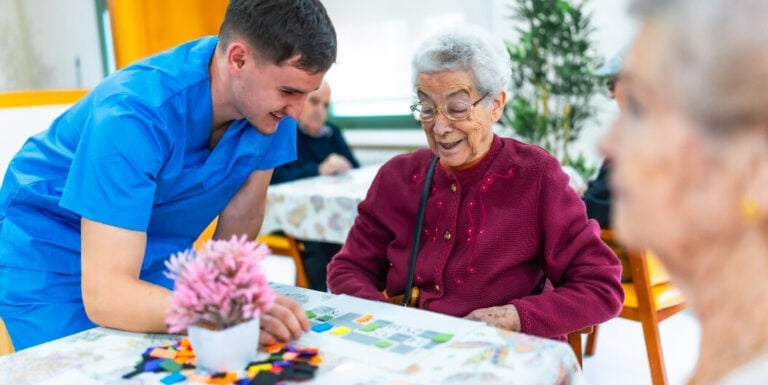
Why Are In-House Therapies So Important for Seniors in Memory Care?
In-house therapies are a critical component of memory care. They offer consistent, on-site access to therapies that improve cognitive function, emotional well-being, and quality of life without requiring your loved one to leave the comfort of their community. Music therapy, art therapy, reminiscence work, and sensory stimulation work best when integrated into daily life rather than as one-time visits to a different location.
When your loved one has Alzheimer’s or another type of dementia, any trip out of the community is disruptive. New surroundings, unfamiliar people, and a lack of structure can all contribute to confusion and anxiety. In-home therapies completely eliminate these barriers, bringing care directly to your loved one in an already safe environment.
What Is In-House Therapy in Memory Care?
In-house therapy refers to any therapeutic programming that takes place within the memory care community itself, led by trained staff or visiting specialists who come to the residents, rather than the other way around. These therapies are specifically designed for people with cognitive decline and are integrated into daily and weekly programming, allowing residents to access them as part of their normal routine.
This is fundamentally different from scheduling outside appointments, organising transportation, and navigating waiting rooms. In-house therapies are more effective and less taxing because they meet your loved one where they are, both physically and cognitively.
Which In-House Therapies Make the Biggest Difference?
Several types of therapy have consistently demonstrated benefits for memory care residents. They are all unique, but they all have one thing in common: they engage your loved one’s mind, body, and emotions in meaningful ways that improve their overall well-being.
Music Therapy
Music has an amazing ability to reach people with dementia in ways that talking and traditional activities cannot. Recognisable songs can evoke memories, lift spirits, and even inspire otherwise withdrawn residents to sing or move spontaneously.
In a structured music therapy session, a therapist may play songs from your loved one’s era, encourage gentle rhythm activities with simple instruments, or simply create a calming environment with carefully chosen melodies.
The emotional response to music frequently bypasses the brain’s damaged areas and activates deeper pathways of recognition and pleasure. For many families, seeing their loved one’s face light up during a music session is one of the most powerful reminders that the person they love is still present.
Art and Expressive Therapy
Art therapy allows memory care residents to express themselves when words are insufficient. Painting, drawing, sculpting with clay, and even simple colouring activities stimulate different parts of the brain and provide a sense of accomplishment that is independent of verbal communication.
The beauty of art therapy is that there are no correct or incorrect outcomes. The resident does not need to produce anything identifiable to benefit from the process. The act of selecting colours, applying paint with a brush, and watching something come to life on paper is therapeutic in and of itself. Creative expression is frequently a key component of memory care programming for communities that incorporate purposeful activities into their daily lives.
Reminiscence Therapy
Reminiscence therapy uses familiar objects, photographs, music, and conversation starters to help residents access long-term memories. Short-term recall can be severely impaired, but many people with dementia have vivid memories of years past, and accessing those memories can be very reassuring.
Reminiscence sessions may include looking at old photographs, handling objects from a specific time period, or talking about childhood vacations, first jobs, or family recipes. These conversations do not require your loved one to recall the events of yesterday. They invite you to relive a time when their memory was so strong that they exuded visible confidence and emotional warmth.
Therapy for Sensory Stimulation
Sensory therapies use touch, smell, sight, sound, and taste to create calming, grounding experiences for residents who struggle with verbal communication or abstract thought.
This could include aromatherapy with lavender or other familiar scents, textured objects such as soft fabrics or smooth stones, light therapy with soothing visual projections, or taste-based activities with familiar flavours.
Sensory stimulation is especially beneficial for residents in the advanced stages of Alzheimer’s and dementia care, when other forms of engagement become more difficult. It meets your loved one where they can process and respond, making it one of the most inclusive therapy options available.
Why Is It Important to Have These Therapies Available On-Site?
Where therapy takes place is more than just a matter of convenience. For memory care residents, it has a direct impact on how well the therapy works and what your loved one experiences.
It resolves transport issues
Getting a person with dementia to an outside appointment entails getting them dressed, into a vehicle, to a location they are unfamiliar with, through check-in, and back again. With each step, there is more confusion, agitation, and fatigue. When they arrive, they may be too stressed to benefit from the session.
In-house therapies avoid all of that. Your loved one walks into a familiar room, walks down a familiar hall, sits down with people they see every day, and begins the session feeling comfortable and safe. This baseline of calm makes therapy much more effective.
It promotes consistent and routine-based care
Consistency is one of the most important factors in dementia care, and in-house therapies allow you to build therapeutic activities into the same schedule every week. Because music therapy is every Tuesday morning and art therapy is every Thursday afternoon, your loved one’s body and mind begin to anticipate those sessions, even if they can’t consciously remember them.
This type of rhythmic engagement strengthens neural pathways, creates positive associations with specific times of day, and provides your loved one with something to look forward to without requiring active memory.
How Can In-House Therapies Improve Your Loved One’s Emotional Health?
In addition to the cognitive benefits, in-house therapies give memory care residents something that is often overlooked but extremely important: a sense of purpose and belonging.
When your loved one participates in a group music session, paints with other residents, or shares a memory in a reminiscence circle, they are participating in a shared experience that connects them to the people they are with. This social aspect reduces isolation, boosts mood, and strengthens the sense that they are still a functioning, valued member of a community designed for their needs.
And for families, the quiet but profound relief of knowing that your loved one is receiving these therapies every day, without you needing to schedule appointments, arrange rides, or worry about missed sessions; it means that the care is taking place with or without your presence to supervise it, which is what a good memory care community should provide.
Looking for a Memory Care Community With Meaningful Therapies Built Into Every Day? Discover Lynridge of Arlington Memory Care Today
Every day, our specially trained team at Lynridge of Arlington Assisted Living and Memory Care brings thoughtful therapeutic programming right to our residents. Every bit of this from creative expression to engaging the senses to structured activities designed to support cognition – is designed to support your loved one’s thriving. Contact us today to schedule a tour of our Arlington, Texas community and see how in-house dementia care therapies make a big difference.