Managing the Shift from Verbal to Non-Verbal Communication in Dementia Care
Is your senior loved one with dementia making loud moaning and grunting sounds and repeating isolated words that confuse everyone? They may struggle to communicate and often forget what was said during the conversation. The decline in communication is termed aphasia, in which their ability to process information gets weaker over time, and their responses become delayed.
When your loved one progresses through the stages of dementia, the diminished verbal capacity often worsens, making the shift challenging for both you and your senior loved one. However, with the help of proper memory care and modern techniques, you can manage the change from verbal communication to non-verbal cues, making a meaningful difference in their quality of life.
In this post, we’ll discuss some traditional approaches to navigate your loved one’s decline in language ability and find alternate ways to connect!
Power of Non-Verbal Communication for Seniors With Dementia
According to research by The University of Texas Permian Basin, around 55% of communication happens non-verbally. Many people underestimate the power of simple gestures and expressions. However, simple gestures and expressions often convey emotions and profound messages more deeply than words ever could. Their power creates a significant difference, especially in the lives of people with dementia.
For instance, when a memory care resident with dementia sees a relaxed posture, soft eye contact, and a warm smile, they feel encouraged to communicate. Similarly, they can also give non-verbal signals to disclose how they’re feeling, whether they’re anxious, in pain, confused, or content.
However, as someone who’s never experienced caring for someone with dementia before, how can you communicate with your loved one and understand their non-verbal cues?
4 Practical Tips for Adapting to The Non-Verbal Communication Shift
1. Talk Gently and Stay Positive
Don’t rush when you’re trying to understand your loved one’s emotions and physical well-being. Keep in mind that your loved one is losing their ability to communicate as the dementia progresses, so they may struggle to express their emotions or speak their mind.
While it’s not easy to stay calm all the time, a slight frown in your expression or your frustrated tone can make them feel distraught. So, it’s best to maintain gentle eye contact and speak while being at their eye level, which will reassure them and uphold the sense of attention.
Apart from that, consider using short and clear sentences with a warm tone to reduce confusion. Moreover, as you speak, give a pause after every sentence to give your loved one enough time to absorb your words. It will build trust and show engagement, leading to better non-verbal communication.
2. Visual Aids To The Rescue
Illustrations can do wonders in your conversations, especially if your loved one is struggling to get their message across through words. Pictures speak where words fail to express.
Visuals, cue cards, dementia-specific apps, or objects can help them convey their feelings. You can also easily figure out what they want or need through images.
For instance, showing a picture of breakfast options would make it easier for them to choose what they want to eat. Also, if you want to go for a walk with them, bringing their coat and shoes along, and showing arm movement will help them understand what’s next.
3. Engage In Activities Respecting Their Personal Space
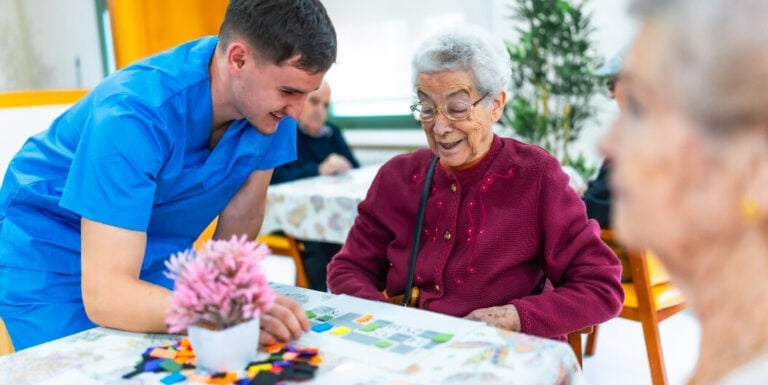
A healthy amount of interactive events and activities, like drawing, music, or dancing, can help your loved one tap into their long-term memory. It would keep them in the present moment as you spark short conversations and talk about their favorite album or song.
Don’t forget that maintaining a healthy distance and giving them space is also crucial. Unnecessary attention or crowding can overwhelm them, leading to severe agitation and confusion.
4. Body Language And Physical Cues
Comforting your senior loved one with a touch is another helpful approach when they don’t communicate in traditional ways. You can hug them, pat their shoulders, and shake their hands, and then watch them out through their body language.
When you’re with your senior loved one who is verbally non-responsive, try to keep your movements slow and smooth, along with reassuring nods or patting hands on their shoulders.
Most importantly, refrain from using sudden gestures or frowns, as they can upset your loved one. Match your facial expressions and tone of your voice with theirs, making it easy for them to understand and recognize the patterns.
Is Your Senior Loved One With Dementia Struggling with Communication Decline? Help Your Senior Loved One Reclaim Lost Connections at Lynridge of Arlington
Managing the shift from verbal to non-verbal communication requires patience and empathy. It’s not a one-day process, and over time, words will fade away. Non-verbal cues and expressions are key for safely communicating with people with dementia and maintaining the emotional connection.
At Lynridge of Arlington, our memory care team uses practical communication strategies to ensure our residents feel heard and valued. Our staff truly understands the needs of people with dementia care and leaves no stone unturned in providing the specialized support they need as the disease progresses.
Schedule a tour to see how we can help your senior loved one with dementia manage non-verbal communication.